
Portable Fish Finders – An Ultimate Buying Guide
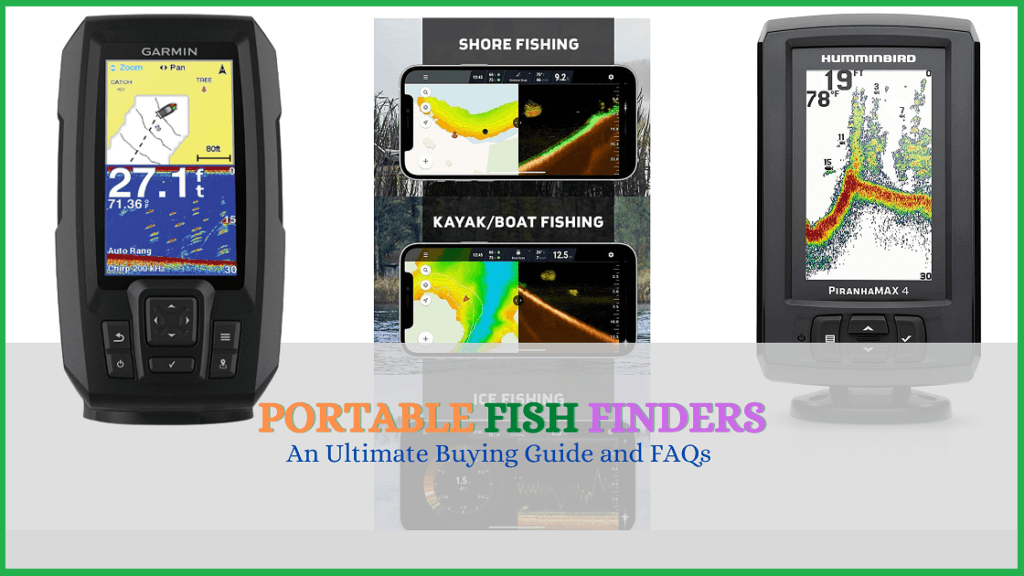
Fishing has a lot more to do with patience. But you can’t wait for the fish to bite, especially if you’ve had trouble driving to a lake. Portable fish finders takes the guesswork out of fishing. You can spend some more time fishing and less time sitting.
In this article, we’ll take a look at the on what are the portable finders, what should you check before buying one and what are the benefits to use portable fish finders.
What is a fish finder?
A fish finder is a sonar tool that helps locate fish. Sonar stands for Sound Navigation and Ranging. Depending on the model you choose, a sonar may be equipped with GPS, marine radar, and a compass to help you find your way on a boat or kayak. Sounders use sound to locate underwater objects. They work by sending out pulses of sound and waiting for an echo. The frequencies used vary, from very low (infrasound) to very high (ultrasound).
What is portable Fish Finder?
A best portable fish finder is a small device that uses sonar technology to detect objects below the surface. It is ideal for detecting all types of fish, large and small. The best thing about these gadgets is that they don’t need to be mounted on a boat to work. Traditional fish scanners must be connected to a boat. With these, you can fish from the shore without having to worry about the logistics. As you can imagine, they are cute and light. The little ones fit in your pocket and pair with your phone. But even the largest models are compact enough to fit in a small backpack.
Is a fish finder useful?
If you are in the open ocean, your eyes are not good enough to spot where the fish are. If you are looking for a big catch, a fish finder can help you tremendously as it can also indicate the size of the fish you are observing. Fish finders are useful in both shallow and deep water. With the side angle fish finders and wider-angle transducer cones, you can detect fish in shallow water up to ten feet.
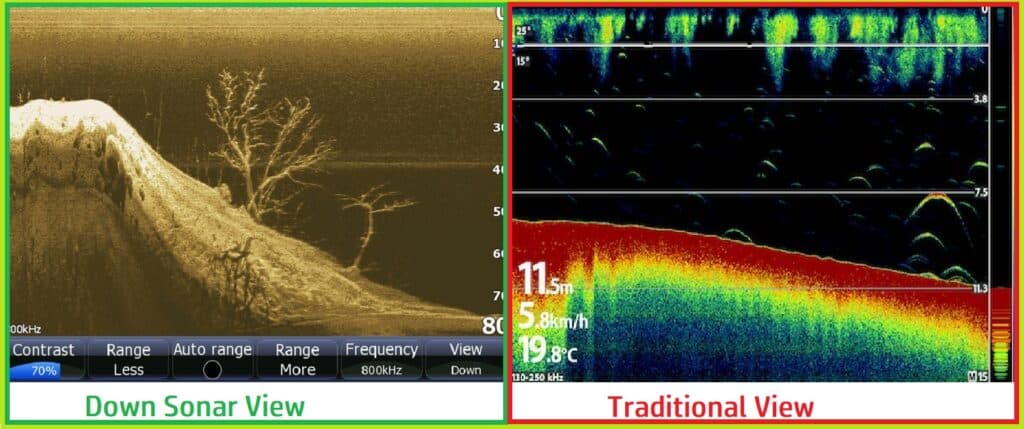
This tool will also help you determine the depth of the bottom – many fish finders have a depth sensor, which allows you to determine the depth of the water. Knowing the depth of the water is helpful in understanding the types of fish in the environment and what to expect below. Depth is usually displayed at the top left of the sonar screen. The GPS option is also useful for locating and returning to the same place you were before; in case you find a good fishing spot.
Choosing Fish finders: An Ultimate Buying Guide
Finding a fish scanner that matches your needs is essential. These aren’t cheap devices, so it’s important to find one you like when you first purchase. With so many portable units available online, it can be easy to get lost. That’s why we’ve created this Portable Sonar Buyer’s Guide – to guide you through your research. When browsing online or in a store, look for these features. The best sonar will check most of these boxes.
Rating Power
Every fish scanners have a power rating measured in watts. Few models have a lower rating and others a higher rating. Although they both work, the best units have high efficiency. They can get accurate readings for greater depths. So if you are planning on deep fishing, we recommend that you get the most powerful unit you can afford.
High quality of the transducer
A high-quality transducer is important key to good readings. This is what emits sound waves (sonar) and tells you if there are fish nearby. A bad transducer is useless. Companies don’t always advertise these coins’ good (or bad). Look at customer reviews for mentions of “precise readings.” If you’ve found a lot, well done! You can proceed to the next step.
Connectivity
If 21st-century technology is your thing, getting a scanner that can pair with your phone is probably a good investment. You will be able to share the details of your fishing trip with friends and even analyze maps afterward in comfort. Connectivity is by no means a crucial feature. Keep in mind that these devices are more expensive. However, a sonar that can’t connect to other devices does the job just as well as a more elaborate one.
Screen Size
Most of the screens we’ve seen are at least 3.5 inches diagonally. Few models have larger screens, and others have even smaller screens. Which one you get depends on how you see it. and Which screen you feel comfortable with?
Frequency
Some units allow you to adjust the frequency of the sound waves emitted by the transducer. It is very useful to fish in deep and shallow water. It allows you to get a more transparent and sharper image of the surface below. Higher frequencies operate in shallower areas, 190 kHz and 200 kHz. A low frequency (50 kHz, for example) works best in deeper areas.
Waterproof
Strangely, not all sounders are waterproof. Transducers still are, but LED displays can be damaged by splashing water. You’d better spend a little more to get a waterproof unit. This is the best way to maximize your investment.
Cost
Finally, budget for your portable sonar and stick to it. You will find units between $ 50 and $ 350. At the end, you’ll see minimalist units with no GPS and no connectivity. The units will have many more sophisticated settings at the more expensive end of the scale. However, at the end of the day, find all the fish.
How to get readings from the fish finder?
Reading fish finders is not difficult, but it is essential that you learn how to do it correctly before you go fishing, otherwise you will not be able to use your device perfectly. Some sonars support colour, while others are only available in grayscale.
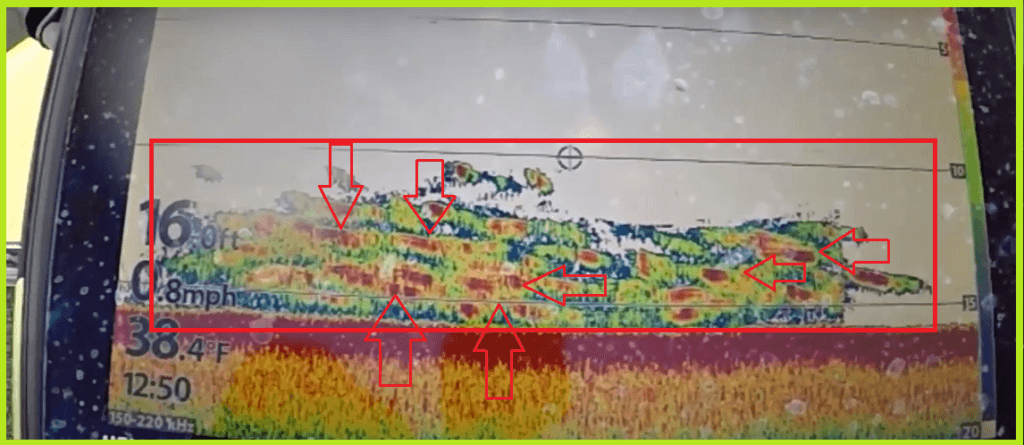
Colour sounders use them to visually represent information. Hard, dense objects will return a stronger echo. If the returned echo is strong, the colour used on the screen will be darker. the seabed, or the bottom of the body of water, is often presented as the darkest object. Some tools will be able to show you a fish icon. This is the case with Fish ID technology, which converts raw data into a user-friendly interface.
Some Advanced Fish Finders devices like deeper pro fish finder and Lowrance fish finders even display different symbols for plants, rocks, or schools of fish. The downside is that they are sometimes less accurate and sometimes show algae like a school of fish or rock like a plant.
Garmin Fish Finders or Arch finders are more accurate, but only return raw data such as a series of arcs and lines. You will have to interpret them yourself. A common mistake many anglers make is to believe that a longbow means a big fish. The length does not represent the fish: to understand its size, you have to look at the width of the arch. It doesn’t matter if the arc is short, if the line is thick, it is probably from a big fish.
In addition, the arches can be half or full. A half arch does not mean a small fish. Again, its width is your best clue. There are many different models available – before you go fishing, be sure to read your sonar manual carefully.
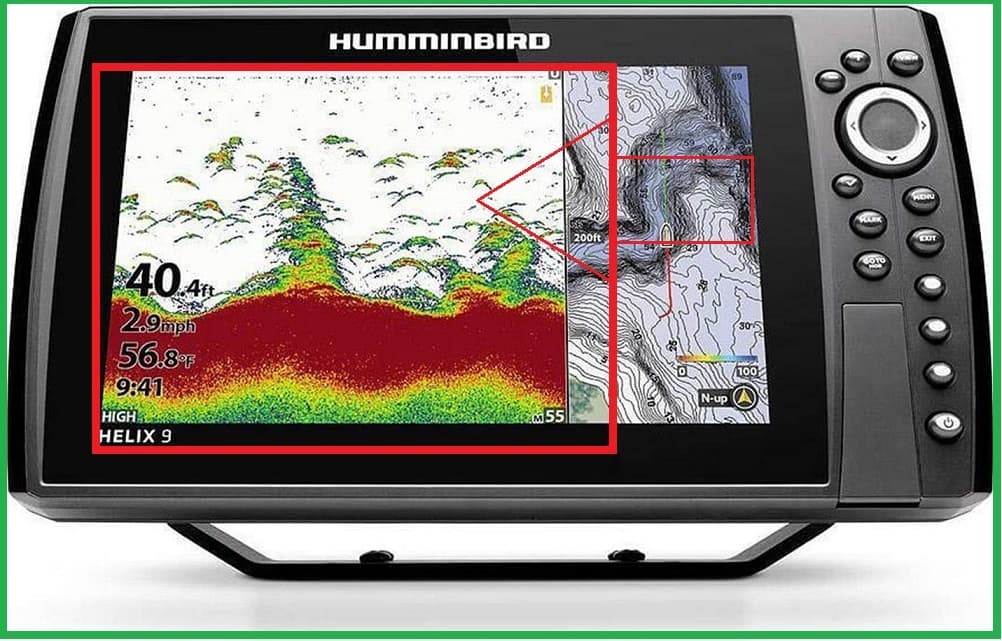
To read the data carefully and be able to find and catch fish, you will need both preparation and training experience. Fish finders are incredibly valuable tools – the more you learn to use them, the more successful your fishing trips will be.
Frequently Asked Questions (FAQ):
What is Kayaking Fishing Fish Finders?
Portable fish finders for kayak are most useful for kayak fishing. However, the setup can get a bit tricky and not all devices will work on a kayak. Firstly, make sure your fish scanner uses rechargeable or disposable batteries. In this case, great! Some models need to be plugged into a 12-volt battery, such as that in a boat or car. With these, you will not be able to kayak.
Secondly, find a way to mount the scanner on the larger, bulkier models may have suction cups at the bottom that you can attach to the front of the kayak. You can also find a place on the floor of the kayak to set up your sonar.
Alternatively, if you are using a scanner that sends the readings to your phone, you can attach the phone to the fishing rod. There are ways to make it less precarious. For example, you can take a phone holder and attach it securely to the pole.
Can we do fishing in the Dark?
Fishing in the dark, when water temperature is constantly 70 ° or more, will increase your chances of landing not only lower but also bigger. Don’t wait until it gets completely dark. It begins when the sun sets towards the horizon. If you’re the only one in the water, you’ll likely catch the big fish. Also, night fishing allows for better visibility than day fishing. Most species of fish, including crappies, have good eyesight.
What is the best portable fish finder for kayak fishing?
Maps and GPS are great tools for fishing, and there’s no point in kayaking without them. This leaves two options for portable kayak fishing, the Garmin Striker 4 Portable and the HELIX 5 CHIRP GPS G2 PT. Both units can be installed in the base of a kayak, with the suction cup transducer mounted on the hull. The Garmin has great sonar however no maps with GPS, whilst the HELIX 5 has both GPS and an SD slot for using mapping maps, it just depends on what you want.
Can fish Finders help when fishing in the Dark?
Yes, fish finder’s definitely help when fishing in the Dark. It also helps you see the transducer in the Dark if you go fishing at night. The transducer and hand scanner can be recharged.
Conclusion
The devices use sonar technology to detect the presence of fish. Utilizing it, you can steer your boat where more fish are to catch. As they’re portable, you don’t need to mount them everywhere. Some models even fit in your pocket – that’s how they get small!